Friday, 23 August 2013

Our Crowdfunder.co.uk Campaign - Pledge your support today!


Hello Brand Builders : 
We have launched a campaign on Crowdfunder.co.uk to get enable us to hire our branding/marketing team to populate our new Brand Database with the competitors of our Crowdfunder.

READ ON IF YOU WANT TO KNOW MORE.

OR

GET FREE COMPETIVE ANALYSIS WHEN YOU PLEDGE YOUR SUPPORT HERE


OUR PROJECT : A BRAND DATABASE
We are building a Brand Database for small businesses to have access to affordable ££-£££ competitive analysis. A traditional branding agency would charge you £,£££-£££,£££ to build your brand for you. 

With the funds we will hire 3 marketing graduates for 6 weeks to populate the Brand Database with Brands so we can launch our site and our first Brand Strategy Tool. 

We want to put YOUR COMPETITORS in our Brand Database first so you, our Crowdfunder Supporters can receive full benefit from our first Brand Strategy Tool on the day it is launched.


Brand Database graphic

HOW THE BRAND DATABASE IS KEY TO HELPING SMALL BUSINESSES
We excel at making people happy about shopping and we want to show you how you can create your Brand Proposition, Story, Values Culture & Vision through an analysis of your competitors. Our tools do this. The Brand Database is connected to each brand strategy tool and when selected, populates each tool with the competitive information for you, enabling you to leap over the branding learning curve and position your brand in your market with an informed point-of-view.
We will offer 3 levels of Brand Strategy Service
OUR FIRST BRAND STRATEGY TOOL :
Our first tool is a Brand Proposition tool. You'll learn what your competitors offer to customers in exchange for their business and which brand offerings you should focus on to have a chance to be successful in your market. You'll then position your brand in amongst your competition by the value of importance that each offering has for your business and to your customer. At the end of the step-by-step tool, you'll be able to download your results as a presentation-ready graphic. This is Branding 2.0.


Presentation ready tool results

WHY WE NEED YOUR SUPPORT :
1) It has always been our plan to initially populate the Brand Database with Brand information before we launch. We want to make a positive financial impact for every business that uses our Brand Database, so we've decided that we should fill the Brand Database with Brands that our Crowdfunder supporters have identified as their competitors, so they can receive full benefit from the first tool on the day we launch.

2) Our Brand Database will later be populated by crowdsourcing and, or by hiring our Brand Concierge service to populate the tools for you. This is a unique opportunity to receive some traditionally expensive competitive analysis for a truly low price.

3) Our Brand Culture has a mentoring facet : Everyone on our BrandStarMe team has mentored graduates into competent, confident human beings who now love their careers. We'd like to do our part and put some graduates into the workforce in a field they actually studied.

OUR BUSINESS :
We are bringing affordable branding to small businesses, which is an underserved market. So many businesses are failing and our tools can help small businesses audit their brand from a customer point-of-view. We want your customers to love you, believe in you, trust you, go to you and recommend you.
We aren't designing logos or brand identities, we only focus on helping businesses create the vital brand strategies they need to become more successful businesses. After you have a solid brand strategy you can then re-design your logo and market a brand identity that truly suits your business.
3 parts of branding graphic

OUR BRAND CULTURE :
"Our Team is Your Team" Building a great Brand is about focusing on what your customer needs and wants. In that spirit : Our attention is focused on all aspects of what what our customers' need to build their brands. We want you really enjoy working on your brand.

(A not-so-secret-secret : successful brands work on their brands every single day, that is why they are successful)
Once you like/love your brand you can live it and then you'll want to work on it everyday too.

WHY WE ARE DOING THIS :
After 17 years of designing stores for high-end and luxury retail brands for my full-time profession and gifting my time to startups and small businesses for branding strategy sessions; I found that I could make clear and quick impacts in peoples livelihoods, by running their business or idea through my branding methodologies. I really enjoyed helping entrepreneurs align their business to a brand they could champion, so I founded BrandStarMe and recruited some talented branding enthusiasts to build it with me.
We turn businesses into brands. Support us to help us bring this vision of affordable branding to small businesses.
What we do

Check out our Branding REWARDS HERE.

Wednesday, 24 July 2013

Brand Propositions : Your Promise to your Customers

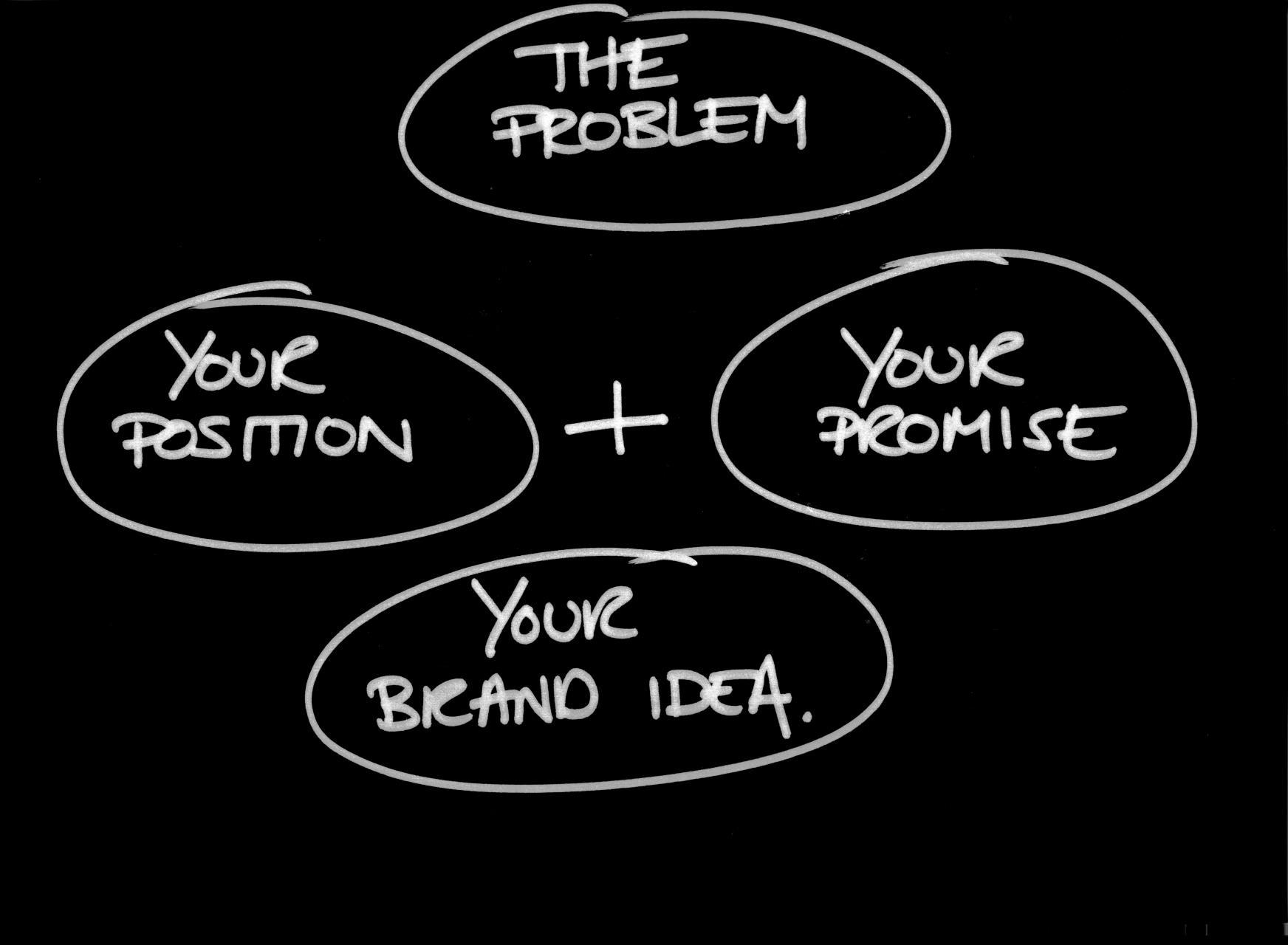
I like this 'Brand Idea Chart' from Adliterate. An entire brand can be created on this little simple chart. Gob smacking isn't it. Once you've answered the question in each circle in one or two sentences, then you need to refine your statement to the world.

This refinement of the right hand circle where it says 'Your Promise' is called a Brand Proposition. It will be your brand statement of clear and deliverable benefits your customer(s) will derive from choosing your brand.

A good Brand Proposition will also include your USP(Unique Selling Point) customer benefit that no one else can provide.

Ultimately a brand proposition is a promise that you'll deliver what your brand says on its tin.

Deeper than that it should build an emotional connection, be engaging, unique, relevant to your intended customer and be easy to understand.

Once you've grasped what your brand is about and you believe you can deliver Your Promise, then you can set yourself the challenge to create a Secondary Brand Proposition.

A Secondary Brand Proposition is an expression/action of your brand promise without using your statement or products.

Give yourself two quick homework assignments.

First fill out the diagram pictures above for your brand and see if you can give Your Promise an emotional connection.

Then think of a highly visible and effective altruist action that your brand team can do to 'live' your Brand Statement.


Tuesday, 4 June 2013

Create a spring cleaning list for your brand

 ~ 30 min DIY brand building exercise #1 ~


It is time to give your business a spring cleaning and get it ready for building it into a blossoming brand!

In writing on this theme, I have decided for this blog post to channel the sage words of Simon Middleton, the self-described brand strategy guru. He has a lot of really great things to say about building a brand. In fact he has written a book called, 'Build A Brand In 30 Days.' (anything in quotes is from his book)

While it will in reality take you longer than 30 days to craft a brand that grows without much effort, its beginning chapter highlights what every business needs to do, which is sit down as a team and review the business from top to bottom, inside and outside. 

It is a spring cleaning for your business. I suggest that you do this before you brief your branding agency or your marketing/PR firm for your next marketing campaign. It is well worth doing and will likely lead to an increase in sales.

Step 1 of spring cleaning is to decide if you want to be a commodity or a brand :
You have two choices with your business. You can either be a commodity or a brand. 
Yes, it is that simple.

Many businesses survive as a commodity. It is a tough road though. "You need to be cheaper, quicker and more convenient than your competitors." This is what customers expect of you.

As a brand you are judged on different criteria.

There are benefits and meanings that customers buying in each industry expect to see, but once you know what those are and make them your own, you can add your own brand personality to them. You aren't tied into being cheaper, quicker and more convenient, although you will likely be pressured to be. Owning your brand is like putting on that stunning suit and shoes that make you look and feel confident. It is okay to say 'no' to something that doesn't fit with your brand, or branding message.

Step 2 of spring cleaning is to measure which aspects of your business are strengths/positives :
  • Draw a large A2 size North/South East/West diagram
  • Put 'positive' at north, 'negative' at south, 'weak' at west and 'strength' at east.
  • Now put your brand's characteristics/offerings on the diagram and see where your business has strengths and where your customers are positive about your brand.
Examples of what to measure : people recognise your brand, you have a clear message(positioning slogan) that fits expectations of customers of your market, size of your geographic brand area, your name, services, pricing, ownership, guarantees, offers, personality, business emphasis, logo, website, staff, your brand is understandable to the customer, words and descriptions and imagery that describes your brand, what comes to your customer's mind when your brand is brought up, repeat business

This diagram is a spider web of all aspects of your business that you customer can see, feel, touch, experience, dream about, cringe about, watch, imagine, hope, aspire to....etc. This is an exercise of seeing your brand through the eyes of your customer. Hopefully you find it fun and enlightening.

Step 3 of spring cleaning is to ask your customer what they think :

....what they think about your self-identified strengths and positives. If you don't know what your customers think about you, ask the next one that walks in the door. Ask why they elected to buy from you. Those answers will be your true strengths and positives.

Do they think you deliver your slogan/positioning line? Do they understand your logo? Does your store environment fit your product(price of your product). Ask what your brand means to them in regards to quality, value and service. Ask about characteristics of your business that you weren't sure where to position on your diagram. Ask where you can improve.

Now in another colour write your new customer revealed strengths and positives on your diagram. Don't forget to put the weaknesses and negatives on there too.

Step 4 of spring cleaning is to sweep away the negatives & weaknesses cluttering your business:

Here is the action part and it is the most important thing you will do for your business this year.
  • On your diagram sheet if you have room - Make 3 columns and at the top of columns put 'Focus On', 'Fix' and 'Stop Doing'
  • Everything written on your diagram can now be placed in one of those columns.
  • In the 'Focus On' column put the positives and strengths identified by your customers.
  • In the 'Fix' column you'll need to use your best judgement and put the items from all 4 quadrants that you/your team identified as crucial to your business/industry, but your customers weren't wowed by your efforts.
  • In the 'Stop Doing' column are all the rest of the time wasting things that you have left in the strengths/positive quadrants of your diagram and the listed weaknesses/negatives in the other quadrants that you obviously haven't been doing well.
  • Only list items once.
There is your brand spring cleaning list! 
Step 5 of spring cleaning is to come up with a strategy :
  • Create a strategy on how to improve each item in the 'Focus On' column and how much time/money/effort should be allocated to each. Give the tasks and act on them.
  • Pick one item on the 'Fix' list and come up with a strategy for fixing the issue. Implement your plan and see if you see any measured change in your customers' behavior.  
For example : more people come in, you get compliments, or you get less complaints than usual.
  • Stop doing everything in the 'Stop Doing' column.
This doesn't mean stop doing your taxes. These are all the things you are doing for your customer that they don't see the need for, you aren't making money on, you are losing money on and the customer doesn't appreciate.

Good luck and send me comments and let me know how you did on this task and whether it helped your small business.


Friday, 1 March 2013

Taxonomy of BRANDING : an education, a clarification and a coining of 'ACCIDENTAL BRANDING'

Someone recently asked me, "Why would someone would want to be a brand instead of a business?"

It is a valid question and since I am in the 'Education of Branding' business, I thought it would be worth breaking down the taxonomy of BRANDING. 


BRANDING HAS 3-PARTS

1) LOGO   2) IDENTITY   3) BRAND

1) LOGO is a mark/symbol/flag/signature. It is designed, thus it is part of 'brand design' = it is for identification of your brand

2) IDENTITY is a group of communication devices that form the overall 'corporate' image of a brand. These visual aspects include the logo, stationery, slogan, marketing collateral, uniforms, packaging and signage.  It is also designed, thus it is part of 'brand design & brand identity' = it is for visual communication of your brand

3) BRAND is the personality of an organisation, service or a product that is shaped by the perceptions of the audience. A BRAND also stands behind the IDENTITY ('corporate image') as the core concept, which proposes that "everything it does, everything it owns and everything it produces should reflect the values and aims of the business as a whole." "It is then the consistency of this core concept that makes up the company, driving it, showing what is stands for, what it believes in and why it exists." "A designer cannot design a BRAND, but the designer can form the foundations" for the personality and the people in the business can live and exude the personality it would like to be known for. It is the audience that turns a BUSINESS INTO A BRAND. We say that a business is a BRAND when the audience recognises it. A consistent personality then becomes a business's reputation.

*The bulk of the descriptions above came from a blog by a graphic designer called, Jacob Cass. His clarity on the topic explains it well and allows me to elaborate further.

So what does it mean when it is all put together as BRANDING?


A LOGO goes into the IDENTITY. A BRAND wears the IDENTITY like clothing and the clothing it wears helps it remember to exude a particular personality, but it is the core concept of the BRAND that makes the BRAND behave in a particular way. A consistent personality indicates a strong brand has been created and everyone in the company understands it and in turn takes on that business personality to deliver consistency. Over time that consistent business personality becomes the business's reputation.

Poorly communicated BRAND VALUES and BRAND STORY that are part of that core concept of the brand = a poorly received BRAND.

A strong BRAND with a consistent business personality will have a strong, well thought of and well received business reputation, which = increased revenues if you have a revenue model operating.

When you have designed a few successful retail store brands like I have you'll begin to take the taxonomy of a BRAND further.  And this is the part that most people miss !!!!

That core concept with the all the parts of the business including the BRAND VALUES and the BRAND STORY should be created from the point-of-view of the main type of customer, who lives within the audience. It isn't good enough to focus on the customer as a BRAND. It is important to see every aspect of your BRAND from their shoes and fix what doesn't reflect your core concept. The true meaning of a BRAND is when your customer likes you so much they can feel it, but have no idea why they like having you around.

When you think in terms of your business from your point-of-view then it is about your narcissism. To have a BRAND is to make your business about your customers' narcissism.

Do you remember when you were a kid and your parents consoled you by saying that "not everyone is going to like you in this life"? It applies here too. Your audience as a BRAND is potentially everyone who, thinks, sees, hears, feels, tastes or experiences your business personality. They aren't your customer, but they will shape your BRAND and judge you on your core concept. The only people you really need to seek and please is your customer. If your core concept resonates well with them, then you probably have a strong brand.


Or if you think you don't have to worry about all this BRANDING malarkey with your business, you'd be wrong, or at least in denial.

If you are a parent you may have heard of the term 'accidental parenting', meaning you aren't being pro-active in setting a routine, or outlining and reinforcing expected behaviour.
I am going to coin the term 'ACCIDENTAL BRANDING'.

In short, every business is a brand!
A business that has a BRAND foundation/core knows who it is, what it believes and why it exists.
A business that hasn't bothered is just 'ACCIDENTAL BRANDING' and the results may vary.

Thursday, 14 February 2013

RECIPE DELIVERY! The new grocery shopping.

I needed dinner inspiration. At some point everyone needs it.

Of course there is online grocery delivery and Waitrose seems to have an endless selection of prepared meals, but frankly, I am bored of online grocery shopping and in-store shopping. Waitrose prepared meals have lost their appeal.

I want to cook and end up with meals that are an explosion of flavour and taste. 
I went in search of the new grocery shopping and 'Recipe Delivery' is where I have found my inspiration.

Recipe Delivery is a tasty business model. 
I have been exploring four UK based startups seeking to restore your domestic god and goddess status in the kitchen.

On my short list of services to try are HelloFresh, Gousto, Jessica'sRecipeBag and Dinnr.

All of the companies will deliver recipes with ingredients to your door for specific number of meals each week. The ingredients will be exact to eliminate wasted food and most of the meals take around 30 minutes to prepare.

The variation of each business model can be found in the details, both on their sites and digging beneath the surface.

I looked at aspects that are important to me, such as selecting recipes for my bag/box order, perusing ingredients, delivery days, mixing vegetarian with non, exotic ingredients and prices.
You may want to consider a few of these details before you select your Recipe Delivery service.
Delivery days :
Jessica'sRecipeBag delivers on Monday evenings
Dinnr delivers Monday through Saturday and has same day delivery
HelloFresh and Gousto deliver on Tuesdays
 
Prices of ingredients and delivery : 
Since I had a refrigerator full of vegetables and Gousto had a downloadable recipe list, I decide to start soft and both shop and cook the first week. I checked prices of a complete DIY meal in comparison with a delivered recipe meal to see if customers were getting charged for a premium food delivery service and if they were getting value for money on the groceries.  
The simple answer is you'll be getting charged the premium delivery service as expected and getting charged above retail prices on the food as well. All of these services are fledgling and they probably aren't yet getting access to wholesale prices on food. When they do, they most likely will keep the savings to aid growth and the customer won't see the deals get better.
If you only want 1 dinner this week, but 4 the next, then Dinnr is your service. It does appear to be slightly higher in price, but it is costly to deliver one dinner at a time.

Grab Bag or Recipe Bag Curation : If the recipe is important, then you should know that HelloFresh and Gousto let you see the recipes when you order your recipe bag/box for the week. 
Dinnr doesn't spell out their recipes or ingredients, but on their site you order each meal separately so it isn't an issue and pictures sell the dishes well. They also have starters and desserts, which the other services don't have.
Jessicasrecipebag just lets you order a bag of meals of their secret curation. There are lots of images on the site of the types of meals one can expect to receive, but it looks like 'comfort food' reigns here so I am not sure if this service is for me if I can't see what is going to be delivered to my door.  
Seeing the recipes on HelloFresh and Gousto have the added benefit of indicating the number of calories/fat/carbs/protein on each recipe.
Since this is a branding education-esque blog, I'll point out that Jessicasrecipebag acts more like a parent brand, where they give you what they think is best instead of the peer-to-peer model of letting you decide if you would like to order what is on offer by revealing the week's recipes. It is rare to go into a restaurant and let the chef make you whatever he feels like, unless you are paying for the privilege and even more rare for a grocery delivery service to pick all of your groceries for you. It simply doesn't happen often in food service, thus a brand needs to be aware that hiding their recipes may put some people off making that first order. Trust comes after the customer enjoys their first order.
Even seeing the recipes I managed to miss something important to me. In the 5 recipes I made from the downloadable Gousto recipes, 3 out of 5 had onions in the ingredients, of which I am not a huge fan. I didn't even realise it until the third recipe. 
Ingredients - everyday ordinary or are we seeking something more unique in a service :
Once I began thinking about the onions, I explored the ingredients and recipes of each brand further.
Each brand had recipes that I could order from a local takeaway. Maybe it is knowing how much salt is or isn't in the food because I have the pleasure of preparing it, that is at the heart of the Recipe Delivery business model. Or does it offer the opportunity to be more?
Now that I am engaged with the business model, I want more. I want to cook with flavour and lots of it. I want to try recipes of cuisines that I don't currently know how to cook and learn how, but I want them to taste better than my local takeaway. I want to be a burgeoning master chef in my own house!
Two of the recipes I tried from Gousto were slightly Eastern Asian in design and taste, but I was left a little disappointed that extent of exotic ingredients was a little fish sauce, rice noodles and bean sprouts.
There is real opportunity for one of these brands to breakaway from the pack and inspire the home cook with authentic meals that are flavorful works of art. Give us recipes with hard-to-find, expensive ingredients that expand our taste buds. Give us a reason to choose your brand over another by giving us ingredients we can't find ourselves at Sainsbury's. Build a little story of origin or discovery that we can share at the dinner table. Engage us, delight us and we'll be your biggest fans.  
HelloFresh is moving in this culinary direction. It has stories about cinnamon and chocolate and begins to make the ordinary, extraordinary with a slight twist of ingredients. Unfortunately I just missed two weeks of great recipes. This week they have comfort food and I see a few onions, so I'll try them out in the near future.
The recipe bags - a little customisation would increase conversion
One thing I have noticed about all 4 of the Recipe Delivery services is that there is no way to indicate that you don't eat pork, or that you are trying to omit meat for one meal a week and you'd like one meal to be vegetarian to expand your palette a bit more. I have an entire cookbook devoted to vegetarian meals, but still struggle to make a meal from it. I'd welcome a little help as long as I didn't have to endure 3 meals a week that are vegetarian. 
Some customer customisation would be a great feature to see in the future of these brands. A 'I'd like to try seafood once this week' bag or the 'no comfort food for me please' bag would make it more interesting.  Even a way to indicate upfront dislikes would help the brands to understand why a loyal customer takes a week off.
I plan to try each of the Recipe Delivery services in the coming weeks. I really enjoyed cooking the Gousto meals, learning how much lentils to serve for two people and knowing how many calories were in the meal I was serving. I am sure I will be delighted in ways I didn't imagine. 
Happy dinner exploration!

Thursday, 6 September 2012

DELIVERY - When to Outsource

In just over two weeks time, my husband and I are excepting our first child to make her grand arrival. As much as I would like to outsource this part of my pregnancy, this isn't a decision I have much choice in, except for the quality of the experience I expect to have.

All the furniture, toys, clothing and random important things that will surround our little one when she arrives on the other hand, will have been mostly ordered online and will have been delivered by a delivery service. 

The one exception is the very large suitcase of memories past that arrived with 'grandma' on her summer visit. 

If there is a delivery gold standard for baby brand companies to live up to it is definitely the 'grandma standard.' Clean and smelling fresh, minimal packaging, on time, packed with loving care and everything arrived intact and in good condition.

I like writing blogs with examples of what works and what doesn't and when it goes disastrously awry and I have a personal experience with it, it can unravel and reveal a story that has taken years to create, thus a great blog topic emerges. Moreover it humanises the brands, which YOU are likely to be competing with for business. It gives you an opportunity to review each step of your logistics from a customer point of view and make the changes that will keep your newest customer loyal.

My first delivery example is Becky and Lolo. I have ordered two items from this small and nursery decoration company. One is the wall sticker above and the other is a colourful painted wooden ceiling mobile with leaves and bugs. The wall sticker arrived with lightning speed and is waiting for installation...once the nursery furniture arrives. The mobile also arrived by superhero transport. The bee's wings on the mobile unfortunately doesn't fit into its slot. A quick phone call to explain the problem and a subsequent check of their entire stock revealed that none of the bees' wings fit on any of the mobiles. While we are awaiting resolution, I am not worried about it as quality of the customer service was high, the issue is slightly bigger than us and I am left feeling confident that a new set of bee's wings will be in the post to us shortly.

In contrast, our Mamas and Papas nursery furniture set delivery has turned into a saga that has taken up quite a bit of my time to resolve. As in all online ordering, we had choices of nursery furniture sets to select from. We selected the set from Mamas and Papas because I strongly feel our baby is coming any day because my body is telling me she is coming soon and waiting four to six weeks wasn't going to work with our baby's arrival schedule. 

Mamas and Papas promised delivery "within 14-days". 
That really should have been the end of it from a customer perspective. 
An order is placed and an order should arrive on a date that is arranged by the company delivering within the window promised by the company.

M&P have great 2-day delivery for small items and that included up to the size of a baby bathtub. Where its delivery goes awry is in their furniture delivery. As I mentioned above, the delivery of furniture is promised "within 14-days". Every pop up window and mention of delivery states this. We added 'assembly' to our order as it was inexpensive and seemed to be a luxury that both save us time and make us feel taken care of by Mamas and Papas. 

Even then the pop up window make no mention of additional time for assembly and nothing before the final 'place order' button indicates this. The fine print at the end of email order confirmation that comes a day after you place your order, is the first place that suggests that the company has 4-weeks to call you to set up the 'week commencing' delivery for which your order will be assigned followed by another 'week commencing' phone call a week later for the company that will come by and assemble the furniture for you...if you are lucky. 

So 2-weeks becomes 6/7-weeks and your furniture order is automatically taken out the "within 14-days" delivery system. They don't deliver it, because I am assuming that they don't want customers to call and cancel the 'assembly' portion of their order once they receive the furniture and realise that it will sit in boxes for the next 4-weeks.

I found the small print 10-days after I placed the order, promptly followed by 5-days straight of phone calls attempting to get the 'assembly' cancelled and our furniture delivered. I was told on the Tuesday of the 5th day of phone calls that warehouse would deliver the furniture to the 'delivery company' by the end week. It was all part of their 'week commencing' policy and that people needed time to do their jobs.

With Mamas and Papas, when your order leaves their warehouse you will receive an email confirmation. By Friday, that didn't come and I called again and again and was finally able to get one of the customer service agents to get permission from her manager to call the warehouse to see why 17-days after we placed our order, the warehouse hadn't managed to process it. One would have thought they were authorised to call and would have made a call the first time I called. Not taking on board the effort I had already put into the issue, the agent was a little indignant and I was told that she was "trying to help me" and that I would just have to trust that she would call the warehouse and I didn't need a phone back to confirm the warehouse would take care of it. 

Trust was not the word that was floating in my mind as I contemplated my customer relationship with this brand at this exact moment.

At their busy times, a phone queue is 20-40mins, which solidified my resolve to stay on the phone until progress was made. Twice I had to refuse to hang up, just to get the agents to move beyond "sorry it has been an inconvenience for me."

The reality is that it is just 4 items in a warehouse, flat-packed in boxes. It really isn't any different than a box with a baby bathtub with a 2-day delivery promise that arrived without drama. 

I also had a email string going with another agent that was convinced that the ordering section of their website informed us of the la-di-da delay that comes with 'assembly'. My husband thinks I pressed the nuclear button by replying with a creative a mock order email with screen captures of each step of the ordering process proving that I was correct in my statements.....the agent didn't write back.

Our order did finally leave the warehouse a day after the last M&P customer service call initiated by me and 4-days of further phone calls to the final 'delivery company' I managed to get a morning delivery slot for today. 

Unfortunately, the delivery van is 3-hours past the 4-hour delivery slot and the delivery van driver has had his phone turned off so his company couldn't reach him. It turns out he has broken down. The driver didn't think it was important to report it to his company and they don't really know when our delivery will come today, if it will come at all.

My zen in this is that I am able to tell you that each part of this story describes a breakdown in the delivery process for furniture items at one particular baby brand. If we had not selected the 'assembly' button this story may not have even happened, but we did and it has.

  • The website is false advertising delivery/assembly wait times, which the customer service agents are unaware of. (I understand this issue has since been fixed on their ordering system)
  • The assembly scheduling team instead of hiring more outside assemblers, are simply not booking deliveries and assemblies because they don't have the man power to complete the orders. It is not seen as a problem in their company by the customer service agents because another team is in charge of assembly.
  • No one is in charge of reviewing orders that should be automatically flagged in their ordering system when they are in danger of lagging behind in delivery and following them to expedited resolution.
  • Customer service agents are not authorised to call the warehouse to check on a delivery without permission, rendering their authority to resolve issues ineffective.
  • A customer service agent is only truly doing their job when they are able to resolve a problem with an order while through an email or phone call with the customer. A return email or a call that result in an apology without resolution, doesn't help brand image and doesn't inspire brand loyalty, it only results in further communication by an unhappy customer.
  • There isn't a 'maximum allowable customer dissatisfaction quotient' that flags to a senior customer service manager that their is a problem with an order and it isn't being resolved. It could be that the customer has called twice about the same issue that prompts a flag on the system. 9 phone calls and 4 emails initiated by a customer is too many, especially when the calls are to a 0845 number and the phone queues are 10-40 mins.
  • There are 2 delivery services involved. One from the warehouse to the delivery company and then from the delivery company to the customer. There is no way for the brand to know that is taking a minimum of an extra 7-days to deliver the order once it leaves the warehouse. This outside company reflects a less than stellar brand image back onto the baby brand. There could be just one company that picks up order-byorder instead of a lorry full of items weekly. The cost saving may be costing valuable brand loyalty.
  • The email confirmation stating that an order has left the warehouse says that it will arrive "within 14 days," is a great idea, however is doesn't take in account that the order has been ignored by the warehouse team for 18-days already. This should be flagged to management immediately, but I doubt that it is.
  • At each step the transparency that could be in the delivery system simply isn't there. It is understandable that people want to keep their jobs and most feel the best way to do so is to stay under the radar. The customer is the ultimate loser in a brand culture where transparency in the delivery process amongst all the logistically teams involved, is missing.
Someone kindly gave me the name and email address of the Director of Operations for Mamas and Papas and once my order left the warehouse and my spiking hormones and frustration were put back into its box, I nicely emailed him outlining the step-by-step issues that had made the delivery of my furniture order goes fantastically awry. Furniture is a big ticket item for companies like Mamas and Papas, they can't afford to lose this business, so as a brand creator and fixer I think these are important issues to point out to a Director of Operations.

If it took 6 phone calls over 8-days to get a customer service agent to ask their manager if they could have permission to call the warehouse and remind them that my order hasn't been touched by their team, but it stands to reason that a story like mine would never be revealed to the Director of Operations.

Within a day of my email, the assembly lead times were fixed on the Mamas and Papas website. I understand the rest of my points are under review by a couple of top people in operations. Good for them and I hope a boost in their bottom line is reflective of the changes in the coming quarter.

So take an afternoon to sit down with your logistics/operations team and find the glitches in your system which cause customer frustration. Give your teams the encouragement to pipe up with comments that can turn your business around without having it be reflective of their abilities and tarnish their image within your company. You are all in this together, so it is better to have transparency inside your brand even if you carefully cultivate and control your brand image to the public.

There are companies like Shutl in the UK that can take care of most of the headache for you if you cannot resolve your retail delivery processes in a timely matter.

Good luck!

Tuesday, 6 March 2012

START-UP FUNDING : Keep your equity and get a loan!


Cash is KING. If your dream is even marginally past the glass ceiling in the UK e-commerce market, at some point you’ll need to devote your full effort to the endeavour. Even if you don’t need money to live on while you build your brand, your brand will need money to take its first breathes of life.
A some pivotal point, nascent start-ups and the individual talents will need to make the leap from moonlighting and  bootstrapping their organic business growth into the phase of a thriving brand. This needs to be a short transition, or you won’t make it.
You need the cash to implement your launch strategy in the shortest amount of time. This is why cash is KING.
I like Paul Graham’s of Y Combinator, start-up cash strategy. “A typical start-up goes through several rounds of funding, and at each round you want to take just enough money to reach the speed where you can shift into the next gear.”
So if you haven’t broken down your start-up strategy into manageable, obtainable and sequenced short term goals, you should do it right away to understand how much capital you truly need to complete your first goal and get traction with customers.
Many are confused about the terminology surrounding funding for start-ups. If you truly need the money to develop an idea that is the fundamental core of your new business, then you are looking for Seed Round Funding.
Angel Round Funding comes after Seed Round Funding, so for the moment, please park your dreams of a large monetary cash sum pegged on your suave presentation charisma and your 10 slide power point presentation. Think first about ‘proof of concept.’
‘Proof of Concept’ is road testing your idea in your slice of the marketplace. However minimal your service or product offering is, get out there and sell it. If you found your gap in the market and it pours money, then you have proof that you can make money on it. At this point you and your partners still own all the equity of your business, have a trading business and a way to determine valuation.
It is wise to establish a trading business before giving away a sizeable chuck of future worth to an Angel. Why not boost your confidence and work out the brand kinks with a start-up business loan to backup the valuation and give your brand a position of negotiation for your Angel Round?
So, how much money do you need for your SEED ROUND of funding? If is under £10K then it is possible to obtain a line of credit attached to your business banking account and your interest rate will be anywhere from 10.5% to 17%.
If the high street banks think you are too risky to invest in, there are two UK start-up lending sites (AKA investor-to-entrepreneur or peer-to-peer lenders) that find Angels of all varieties and they will broker a loan for you at a lower rate than the high street banks.
These are the non-bank business loan options I’ve found operating in the UK.
ONLINE CREDIT BROKER SITES IN THE UK
#1

YouAngel.com is “an internet based social lending community where people can lend money to small and medium-sized businesses, sometimes referred to as peer-to-peer (P2P) lending.” www.youangel.com
Insights: Your minimum loan amount at YouAngel is £25,000 and your fixed interest rate will be between 6% and 10.5% depending on your credit rating. You’re loan will be between 6months and 3years.
YouAngel asks you to pitch your business cash-flow sheets for the past two years with future projections along with what your brand is offering and what you need the cash for. This is online pitching to Angels and there will be genuine questions asked by the Angels, but if you need more than £25,000K, this may just be the lender for you.
(I was invited to join by one of the founders late last year and as far as I can tell, no loans have been given to date, but don’t let that deter you from trying it out.)
#2
Zopa.com “Zopa, one of the sector's pioneers, enables people to bypass the banks by lending money to other creditworthy people at rates that they agree between themselves. This, it says, enables both borrowers and lenders to get a far better deal than they would get from a bank.” – This is Money
Insights: Trading since 2005, it has been mentioned that Zopa will not leave a footprint on your credit rating just for inquiring. Loans are offered for up to £15,000. This may be your least expensive option if you haven’t been trading for two years, but you’ll need to prove income for loan repayment and a trustworthy credit history. You’re loan will be between 3years and 5years. www.zopa.com
#3
FundingCircle.com is “an online marketplace to help businesses find low cost loans quickly and investors get better returns.” www.fundingcircle.com
Insights: Funding Circle’s loan customer will need two years’ worth of official accounts filed at Companies House and is looking to qualify for growth capital between £5,000 and £100,000. There average loan interest rate is 8.4%, but if your pitch is good, the rate could be bid lower.
Around the world : There is Prosper in the U.S., Smava in Germany and Communitae in Spain who have similar lending offerings.
My advice is read all the fine print of each lender. Make sure you have a viable plan for paying your loan back and you are truly committed to your business. Good Luck.